Author name: Sg Ai Business

Uncategorized

How Heartland Businesses Can Join the 5% That Get AI Right

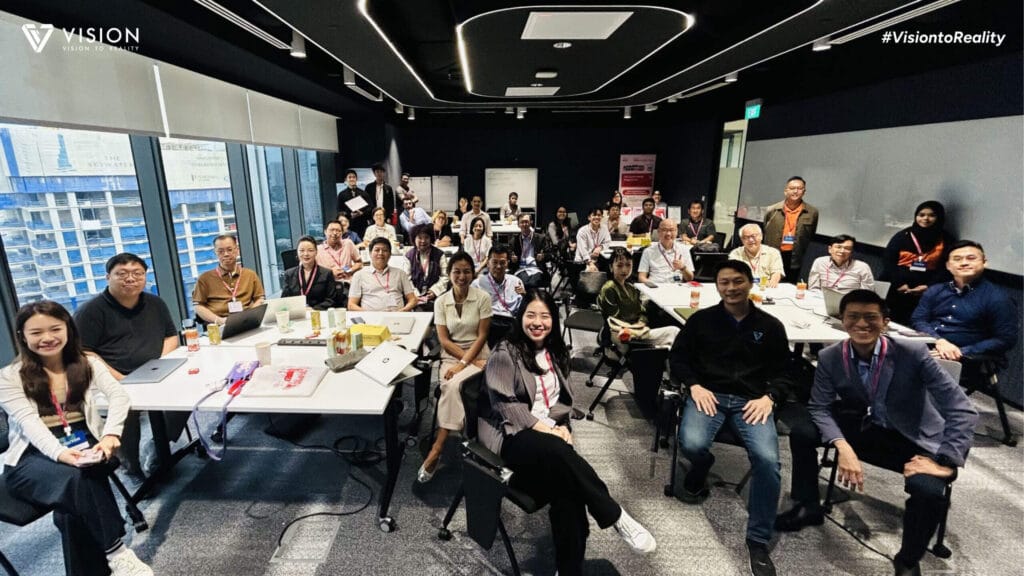
Ask a heartland business owner about AI and you’ll usually get the same reaction: interested, but skeptical. They’ve heard the buzzwords before. However, they often haven’t seen how AI fits a business that runs on foot traffic, WhatsApp orders, and a small team. That skepticism is understandable. MIT research published in 2025 found that 95% of generative AI implementations in enterprises show no measurable impact on profit and loss. In other words, most AI projects fail. Only 5% create consistent and measurable business value. Meanwhile, most AI projects fail for similar reasons: unclear objectives and weak ROI tracking, poor data readiness and control, and a lack of ownership or accountability. In most cases, the issue is not the technology itself. These are planning issues rather than technology issues. Fortunately, planning issues can be fixed before businesses spend money on implementation. That was the key message shared during the Singapore Heartland Enterprise Summit (SHES) 2026 Pre-Summit Workshop: AI Success Blueprint for Heartland Businesses.

Uncategorized

How SMEs Lose Qualified Leads Before They Ever Reach Sales

Most SMEs assume that generating more enquiries will naturally lead to more sales. More website visitors, more WhatsApp messages, and more contact form submissions should eventually translate into a stronger pipeline. In reality, the biggest challenge often begins after someone has already shown genuine interest. A prospect visits your website, sends a WhatsApp message, or submits an enquiry form expecting a timely response. Instead of being recognised as a high-potential opportunity, that enquiry is often treated exactly the same as every other lead. There is no clear process to determine who should be prioritised, who requires nurturing, or who is ready to speak with sales. This is the lead qualification gap — one of the most overlooked sources of pipeline leakage for SMEs, causing qualified opportunities to disappear long before they ever reach a salesperson. The Vision × Fractional Marketer partnership is designed to solve this challenge by combining strategic lead qualification with AI-powered engagement and automation.

Uncategorized

AI in the Heartlands: What Business Leaders Told Us After the SHES 2026 Workshop

A few weeks ago, we shared how the AI Success Blueprint helped heartland businesses at the Singapore Heartland Enterprise Summit (SHES) 2026 move past AI theory and into a real 90-day plan. That post answered the how. This time, we wanted to answer a different question: did it actually work, and what did people think of the workshop itself? So instead of writing another recap ourselves, we asked the business owners directly. Where does AI genuinely help your business, and what was your honest take on the session? What follows are their answers, not ours.

Uncategorized

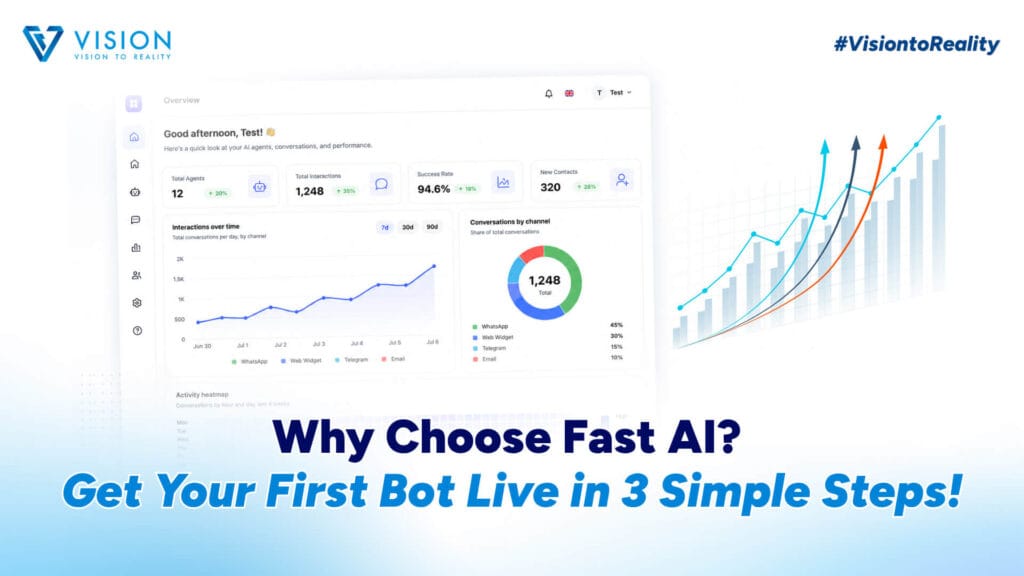
Why Choose Fast AI? Get Your First Bot Live in 3 Simple Steps!

Businesses today understand the value of AI. Faster responses, better customer engagement, and improved operational efficiency have made AI an important part of business growth. Yet for many organisations, getting started still feels like the hardest part. Concerns around implementation, technical expertise, and deployment timelines often make AI seem more complicated than it needs to be. Instead of improving customer experiences, businesses spend valuable time navigating complex setup processes before they can see any real results. The good news is that launching an AI assistant no longer requires months of planning or a dedicated technical team. With Fast AI, businesses can create, deploy, and manage AI-powered customer conversations through a simple workflow that gets them live in minutes. From answering customer enquiries to supporting sales conversations, Fast AI helps businesses stay responsive while reducing repetitive manual work

Uncategorized

Advancing Workforce Capabilities with AI: HR Learning Fest 2026

Across industries, organisations are moving beyond asking whether AI works. Today, the more important question is how businesses can adopt AI in practical ways that create measurable value while preparing their workforce for long-term transformation. While AI technologies continue to evolve rapidly, successful adoption depends on more than selecting the right platform. It requires organisations to develop the knowledge, confidence, and operational readiness needed to integrate AI into everyday business processes. Without these foundations, even the most advanced AI solutions struggle to deliver meaningful business outcomes. This growing focus on capability building was evident throughout HR Learning Fest 2026, where VisionGroup joined Blackstorm Group to connect with HR professionals, business leaders, educators, and ecosystem partners exploring the future of work and AI adoption.

Uncategorized

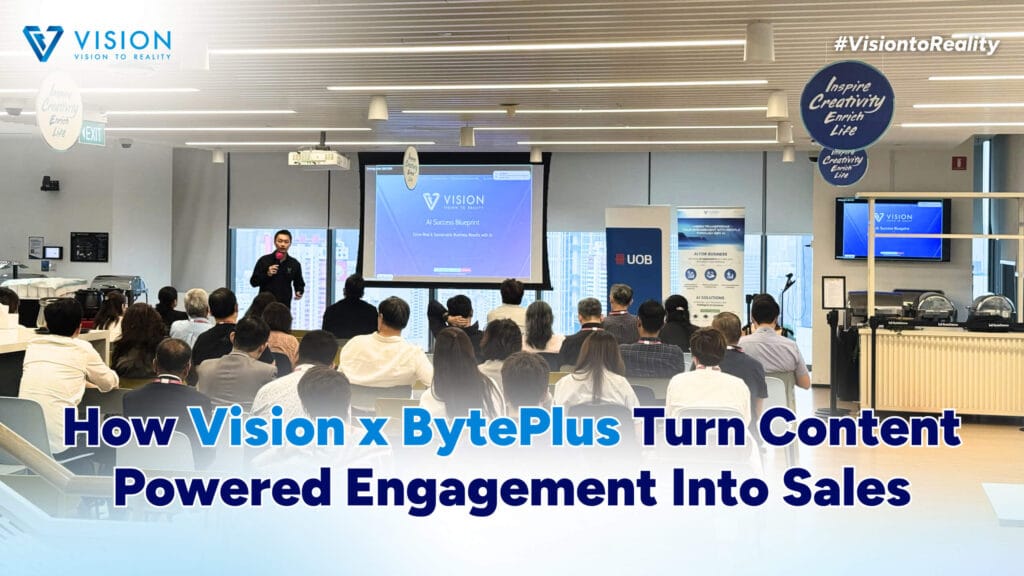
How Vision x BytePlus Turn Content-Powered Engagement Into Sales

Theory only goes so far, so the workshop focused on practical action. Participants applied the AI Success Blueprint directly to their own businesses. For example, retailers mapped after-hours enquiries, F&B owners explored order automation, and service businesses planned their first 90-day AI wins. Your customer is ready. They found you, they messaged you, and they want to buy. Then the momentum dies. It dies because the reply they get is generic. A block of text. A product photo that does not quite match what they asked about. Nothing that makes them feel understood in that specific moment. So they say “let me think about it,” and the window closes. This is the quiet leak in most sales funnels. It is not a traffic problem or a pricing problem. It is a relevance problem at the exact second relevance matters most. It shows up as generic text replies that ignore what the customer asked, stock photos that do not match the product, and pre-made content sitting in a folder, aging and off-target. At our recent session with BytePlus, Blackstorm Group and UOB, we showed a different way to close that gap. This is where content-powered engagement comes in. Instead of pre-making content and hoping it fits, you generate the right content in the moment of the conversation.

Uncategorized

Most Investors Ask if a Company Uses AI. We Ask How Much Value It Unlocks.

Many organisations have already begun adopting AI across customer service, operations, marketing, and internal workflows. While AI adoption has become an important step towards digital transformation, implementation alone rarely creates measurable business value. Without a clear strategy, many AI initiatives remain isolated projects that fail to deliver long-term business impact. To unlock meaningful outcomes, organisations must connect strategic AI advisory with practical implementation. AI should not only automate processes but also support better business decisions, stronger operational performance, and sustainable enterprise growth. This creates a common challenge for many businesses. Some organisations spend too much time exploring AI opportunities without executing them, while others deploy AI tools without a clear value creation strategy. Neither approach delivers lasting competitive advantage on its own. The organisations creating the strongest results bridge this gap by combining strategic AI advisory with AI implementation. This integrated approach helps businesses generate measurable value today while building stronger enterprise value for tomorrow.

Uncategorized

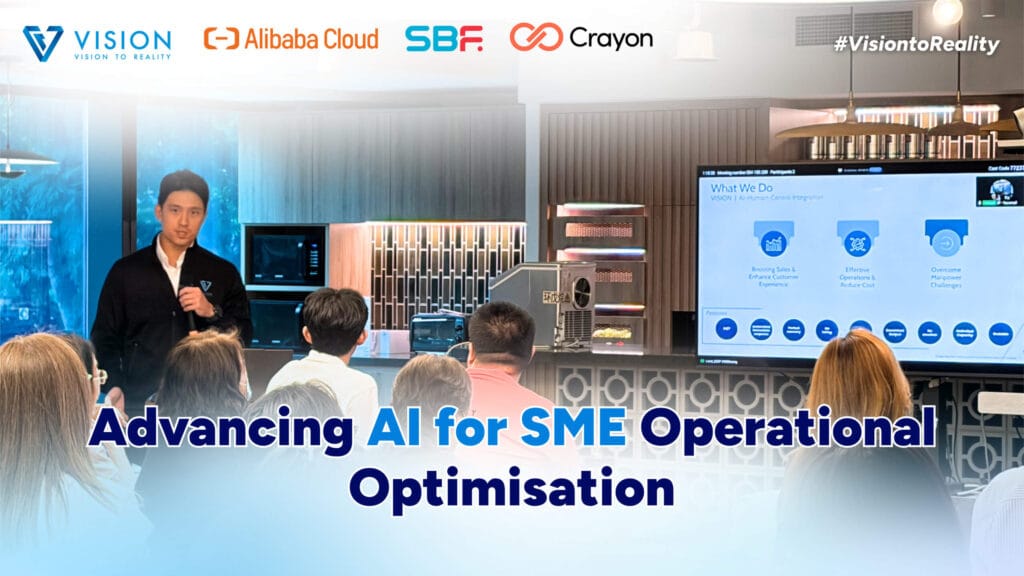
Advancing AI for SME Operational Optimisation

Businesses today face increasing pressure to improve efficiency, manage rising costs, and scale operations with limited resources. For SMEs, the challenge is no longer understanding the potential of artificial intelligence (AI), but identifying where AI can create meaningful business impact. In Singapore, businesses are increasingly exploring AI adoption, but many organisations are still at the early stages of implementation. According to the Ministry of Manpower (MOM) 2026 report, 71.5% of firms have yet to adopt AI, highlighting the opportunity for businesses to move beyond AI awareness and focus on practical implementation. While many businesses are exploring AI adoption, successful transformation requires more than implementing new tools. SMEs need practical AI strategies that address operational challenges, improve productivity, and create measurable outcomes. Vision believes that AI transformation starts with solving business problems first. By combining AI strategy, technology, and industry understanding, Vision helps businesses move beyond experimentation and turn AI opportunities into practical solutions. This shared commitment to accelerating AI adoption was also reflected through collaboration with ecosystem partners including Alibaba Cloud, Singapore Business Federation (SBF), and Crayon. Moving Beyond AI Experimentation Many SMEs face common operational challenges, including repetitive manual processes, manpower limitations, rising costs, and difficulties scaling efficiently. However, adopting AI without a clear strategy can create uncertainty. Businesses may invest in technology without understanding which processes to improve or where AI can deliver the greatest value. Successful AI adoption begins with identifying high-impact opportunities that align with business goals. Businesses need to understand: With the right approach, AI becomes more than a technology investment. It becomes a driver of business transformation, helping SMEs improve efficiency, optimise operations, and create new growth opportunities. Vision’s Approach to Practical AI Transformation

Uncategorized

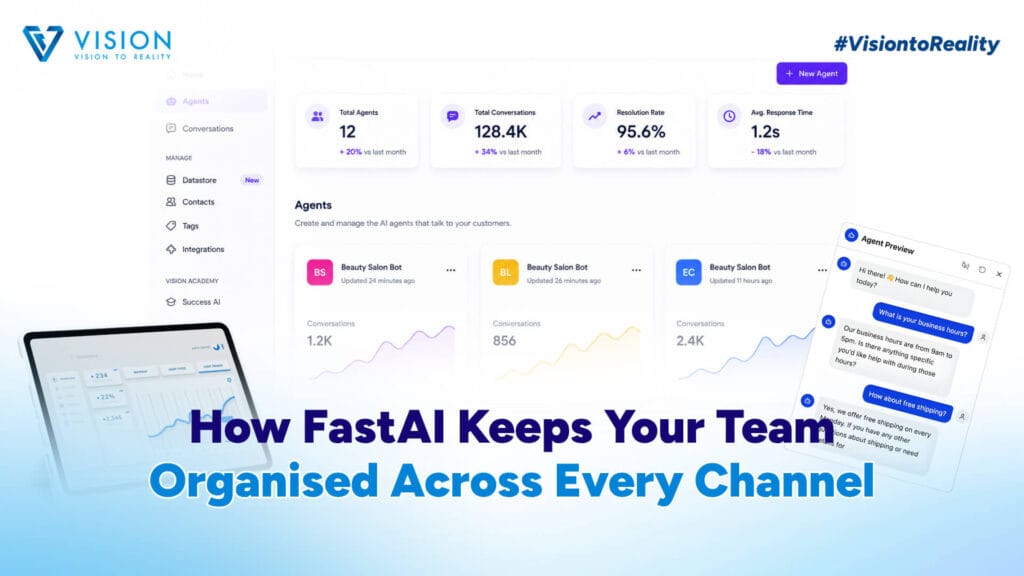
How FastAI Keeps Your Team Organised Across Every Channel

A customer asks about pricing on WhatsApp. An employee messages HR about leave policy, then waits until Thursday for a reply. Neither conversation is difficult on its own, yet neither one ever arrives in the same place. Every channel a business adds creates its own inbox, its own backlog, and its own set of expectations. Teams gradually end up managing the tools instead of managing the conversations. The good news is that solving this has less to do with adding people and more to do with deciding which conversations still need one. With Fast AI, businesses can bring customer, sales, finance, and internal conversations into a single workflow. From resolving repetitive enquiries to qualifying leads, FastAI helps teams stay responsive while protecting the hours that actually drive growth. Where the Hours Actually Go Most teams do not struggle because they receive too many messages. They struggle because those messages arrive in five different places. Every time an employee moves between WhatsApp, email, and an internal chat, they lose context, momentum, and the thread of whatever they were working on before. Multiplied across a team and a working week, those small interruptions become hours that never appear on a balance sheet, surfacing instead as slower replies, missed follow-ups, and inconsistent answers. The real cost is never the volume, it is the switching. Why Adding People Does Not Fix the Structure Hiring more staff to cover more channels works, until it does not. Adding headcount to answer the same repetitive enquiries is expensive and difficult to sustain as volume grows. It also introduces a quieter risk. That risk is inconsistency. One agent answers a question differently from another, follow-ups slip during busy periods, and enquiries arriving after hours sit untouched until the next morning. This means the problem is structural, rather than a matter of effort, discipline, or team size. More people working inside a scattered workflow still produce a scattered workflow, which is why the sequence of the fix matters more than the scale of it. Built for Every Team: Where This Shows Up FastAI centralises conversations and automates the structured ones, so every team keeps its attention on the exchanges that genuinely require Build It in Minutes, Then Let FastAI Handle the Rest None of this requires a technical project. You create an agent, give it your knowledge, and choose where it goes live, a sequence most teams finish in one sitting, without waiting on a developer. The knowledge step is the one that surprises people. Rather than scripting replies line by line, you point FastAI at what already exists: a website URL, a sitemap, an uploaded file, or text pasted straight in, then start from a template built for customer support, appointment booking, information collection, or lead qualification. Deployment is where the four teams converge, because the same agent can go live across your website, Telegram, WhatsApp, email, and a phone line from a single screen. What Changes Once the Repetition Moves Clients running these same AI modules have watched the shift show up in their numbers. A local retailer reduced time spent on customer support by 70% and reached full return on investment within three months, while an aesthetics clinic cut manual admin and scheduling work by 50 to 65%. In both cases the mechanism was identical: predictable conversations moved to automation, and experienced people stayed on the ones that needed judgement. The result is a team that handles more without growing, and a business that stays available whenever customers and employees need an answer. Bring Every Conversation Into One Place! Multichannel communication is not going away, and the number of channels will only keep growing. The organisations that stay ahead will not be the ones hiring their way through the volume, but the ones who know clearly which conversations need a person and which ones never did. FastAI gives teams that clarity by centralising conversations and automating the repetitive ones, so nothing falls through the cracks and no one spends their day simply keeping up.
Post Test

Why SMEs Lose Deals & How to Fix Your Sales Conversion Process

Most SMEs treat a stalled deal as bad luck. The prospect went quiet, the budget moved, the timing was wrong. In reality, the deal often slowed down long before the prospect stopped replying. A lead is qualified, the first conversation goes well, and genuine interest is there. Then a proposal takes five days to arrive, a follow-up reads like a template, and a discovery call never quite establishes why your solution is the right fit. By the time the paperwork lands, a competitor has already answered the question the buyer was asking. This is not a pipeline problem. We have covered how SMEs lose qualified leads before they ever reach sales — but this deal reached a salesperson and still did not close. That makes it a sales conversion problem, and for many SMEs it is where the most avoidable revenue loss occurs. The Vision × Fractional Marketer partnership is designed to close that stage, by combining a structured sales enablement framework with AI that removes the administrative work surrounding every deal. Why a Qualified Lead Doesn’t Automatically Become a Closed Deal A qualified lead is permission to start selling. Converting it depends on how consistently the sales process runs from that point. Without a defined structure, the same four problems appear in almost every SME sales team: Each of these looks manageable in isolation. Together, they produce a conversion stage that moves slower than the buyer does, and slower than a competitor working the same account. The issue is rarely the quality of the salesperson. It is the absence of a shared structure that makes good selling repeatable, and the volume of administrative work that sits between one conversation and the next.

Scroll to Top